
Meta Title:
What Is Tajweed? Importance of Tajweed for Quran Recitation
Meta Description:
Discover what Tajweed is, why it’s essential for Quran recitation, and how non-Arabic speakers can start learning Tajweed with confidence.
📖 Introduction: More Than Just Reading
The Quran was revealed in Arabic — a language rich in depth, beauty, and precision. Reciting it as it was revealed is not just a tradition — it’s an act of devotion. This is where Tajweed comes in.
If you’re a non-Arabic speaker, the term Tajweed may sound technical or intimidating at first. But don’t worry — this guide will explain:
- What Tajweed really is
- Why it matters
- And how you can start learning it step-by-step, no matter your background
📌 What Does “Tajweed” Mean?
Tajweed (تجويد) comes from the Arabic root “ج و د”, meaning “to improve” or “make better.”
In simple terms, Tajweed refers to the correct pronunciation and articulation of each letter in the Quran according to specific rules passed down from the Prophet Muhammad ﷺ.
✅ Tajweed ensures:
- Every letter is pronounced from its correct point of origin (Makharij)
- Proper characteristics (Sifaat) are applied (like elongation, nasal sounds, etc.)
- The rhythm and flow of the Quran are preserved
🕋 Why Is Tajweed Important?
1. 📜 Preserving the Authenticity of the Quran
The Quran is unchanged since its revelation. Tajweed helps preserve the exact way the Prophet ﷺ recited it — ensuring no meaning is lost or altered.
“…And recite the Quran with measured recitation (Tarteel).”
— Surah Al-Muzzammil (73:4)
2. 💬 Avoiding Mistakes That Change Meaning
A small mispronunciation can drastically change the meaning. For example:
- قلب (qalb – heart) vs. كلب (kalb – dog)
Tajweed helps avoid such errors.
3. ❤️ Enhancing Spiritual Experience
Reciting with Tajweed adds beauty, emotion, and reverence. It connects you more deeply with the words of Allah — even before you fully understand them.
4. 🏆 Earning Greater Rewards
The Prophet ﷺ said:
“The one who is proficient in the Quran will be with the noble, righteous scribes (angels), and the one who reads it and struggles with it… will have a double reward.”
— Sahih al-Bukhari
📘 Is Tajweed Mandatory in Islam?
Scholars generally divide Tajweed into two categories:
- Theoretical Tajweed: Learning the rules (recommended but not obligatory)
- Practical Tajweed: Applying enough rules to avoid major errors (Lahn) — this is obligatory (fard ‘ayn) when reciting
🔹 In short:
- You’re not required to master all Tajweed rules at once
- But you must aim to avoid major mistakes that affect the meaning of the Quran
🧠 How Can Non-Arabic Speakers Learn Tajweed?
It’s very achievable — and you don’t need to be fluent in Arabic. Start with the basics:
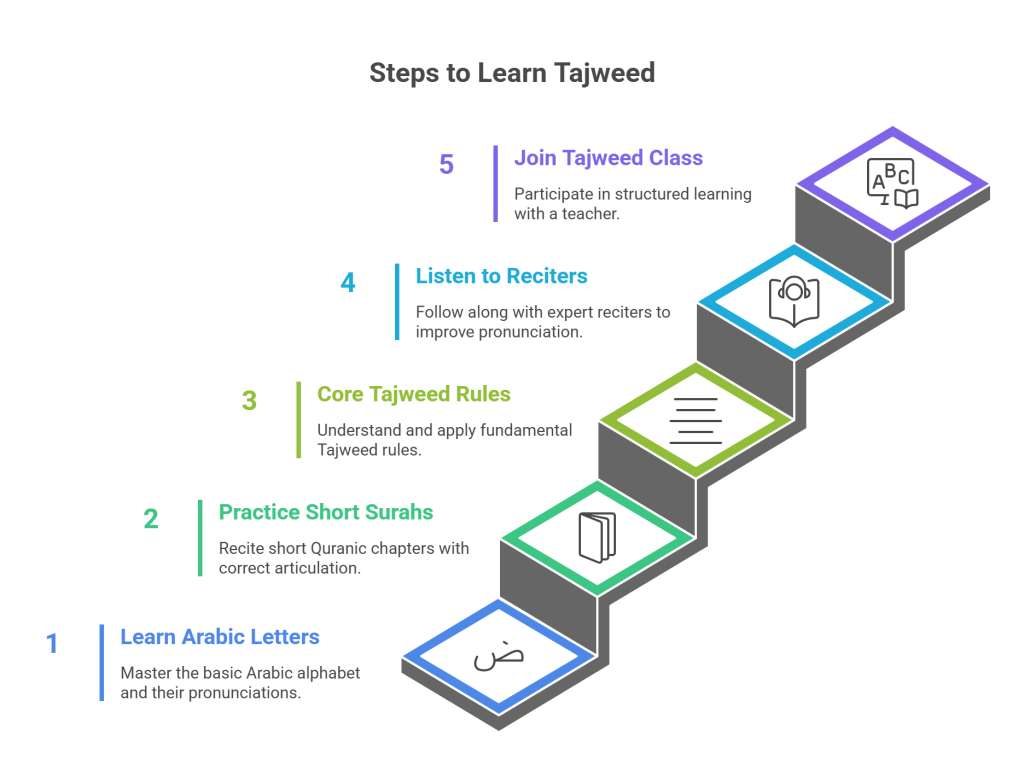
✅ Step-by-Step Beginner Path:
- Learn Arabic letters and pronunciation (Makharij)
- Practice short Surahs with correct articulation
- Start with core Tajweed rules (Qalqalah, Ikhfa, Idgham, etc.)
- Listen to expert reciters and follow along
- Join a Tajweed class or get a teacher
🎧 Recommended Reciters for Tajweed Practice:
- Mishary Alafasy
- Abdul Basit
- Maher Al-Muaiqly
- Husary (slow and clear for learners)
🗣️ Common Tajweed Terms You’ll Encounter
| Term | Meaning |
|---|---|
| Makharij | Points of articulation (how letters are formed) |
| Sifaat | Characteristics of letters (like heaviness, softness) |
| Ghunna | Nasal sound (e.g., in “Inna”) |
| Qalqalah | Echoing sound (e.g., ق ط ب ج د) |
| Madd | Elongation (extending vowel sounds) |
🙋♀️ FAQs: Tajweed Questions Answered
Q1: Can I learn Tajweed without a teacher?
You can start with self-study, but it’s highly recommended to have a teacher for pronunciation correction. Even brief online sessions weekly can help.
Q2: Do children need to learn Tajweed?
Yes, but they should start gradually and in a fun, age-appropriate way. Many online schools have excellent Quran programs for kids.
Q3: How long does it take to learn Tajweed?
It depends on your pace. With consistent effort, many students grasp basic rules within 3–6 months. Mastery takes longer but is worth the journey.
Q4: What if I make mistakes while learning?
It’s okay — the Prophet ﷺ encouraged those who struggle. Your sincerity matters more than perfection.
🌱 Final Thoughts: Begin with Intention, Continue with Dedication
Tajweed is not just about sound — it’s about respecting the words of Allah, showing devotion in how you recite, and striving for excellence.
You don’t have to be perfect to begin. But by beginning, you’re already on a blessed path.